
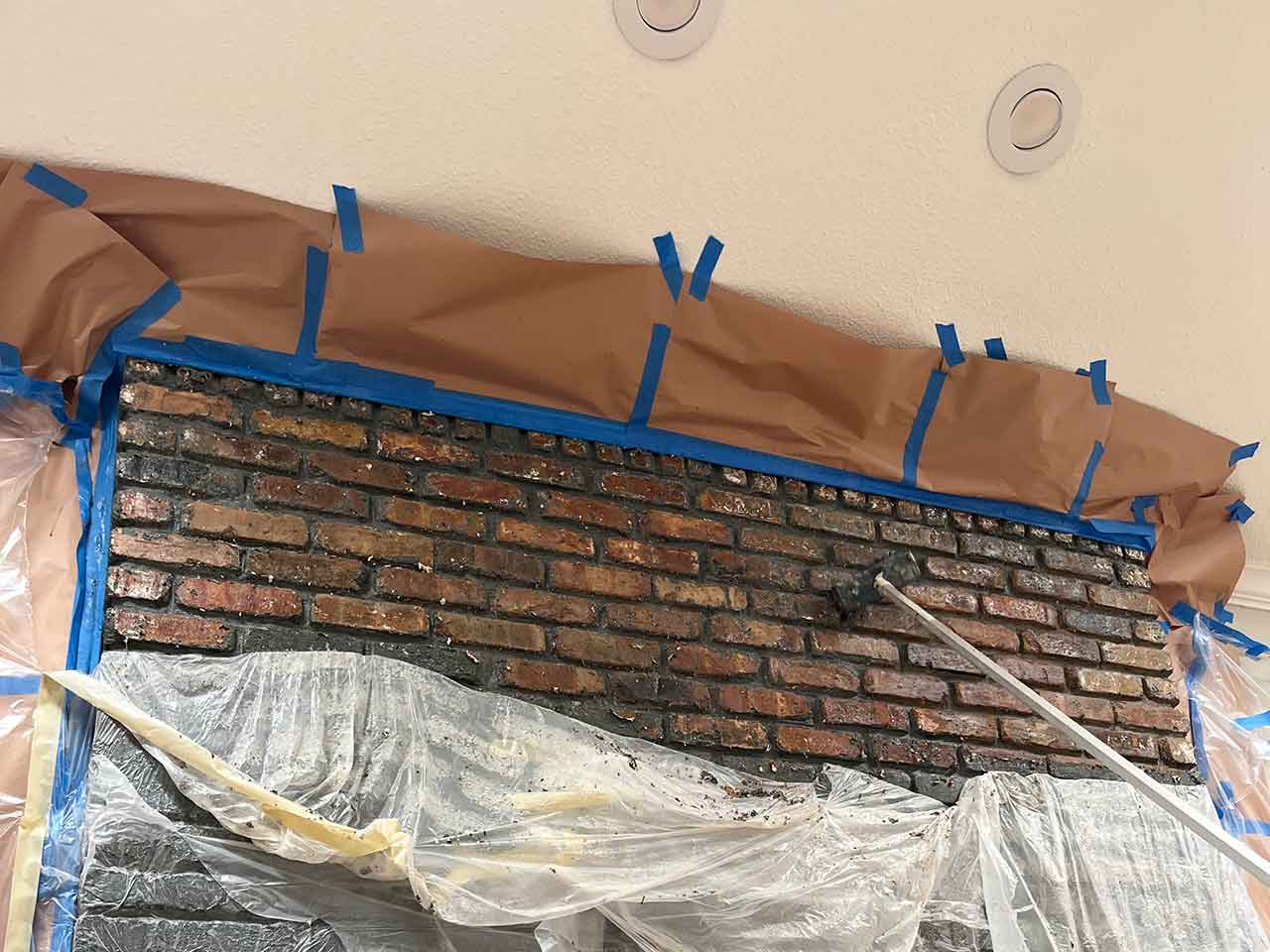
Painted brick fireplaces often change the visual character of a home, but not always in a way that preserves the original craftsmanship of the masonry. In many North Dallas interiors, brick has been coated multiple times over the years, creating a sealed, uneven surface that hides natural texture and reduces architectural depth. While paint may have been used to modernize the space, long-term restoration typically requires more than surface-level removal. It demands controlled, professional brick fireplace paint removal that protects the integrity of the material underneath.
The Complexity Behind Removing Paint From Brick Fireplaces
Removing paint from brick fireplaces is not a surface-level task because brick is inherently porous and reactive. Once paint penetrates the outer layer, it bonds within the micro-texture of the masonry, making full removal increasingly difficult with each additional coating. In North Dallas homes, this challenge is often compounded by older fireplaces that have been painted repeatedly over decades, resulting in layered finishes that behave differently depending on depth, age, and paint type.
Fireplaces also introduce additional complexity due to heat exposure and soot accumulation. These conditions can alter how paint adheres and ages over time, leading to uneven absorption and inconsistent surface conditions across the same structure. As a result, fireplace brick paint stripping requires a controlled approach that accounts for variation rather than treating the surface as uniform.
Another key concern is the risk of irreversible surface damage. When removal is attempted without proper evaluation, brick faces can become etched or weakened, and mortar joints may begin to degrade. Once this occurs, restoring the original masonry appearance becomes significantly more difficult and often requires corrective repair work before aesthetic restoration can continue.
Why Brick Fireplace Paint Removal Requires Professional Execution
Professional brick fireplace paint removal is centered on preservation rather than force. Instead of relying on aggressive abrasion or inconsistent chemical application, professional restoration begins with assessing the condition of the brick, the type of paint present, and the history of previous treatments. This evaluation determines how the material will respond during the removal process and helps prevent unintended damage.
In properly executed indoor brick restoration, the goal is to restore the natural character of the masonry without compromising its structure. When paint is removed correctly, the brick regains its ability to breathe, which helps reduce trapped moisture and long-term surface deterioration. This is especially important in interior environments where airflow is limited, and fireplaces serve as focal architectural features.
Professional methods also account for consistency across textured surfaces. Brick fireplaces rarely have a uniform texture, and recessed areas often hold more paint than raised surfaces. Controlled techniques ensure that these variations are addressed evenly, rather than creating patchy or uneven results that are common in improper removal attempts.
Controlled Techniques Used in Fireplace Brick Paint Stripping
Effective fireplace brick paint stripping relies on a combination of controlled softening methods and precise manual detailing. Rather than forcing removal, professional processes allow paint layers to release gradually so the underlying brick is not compromised. This approach is especially important when dealing with older masonry that may have softened over time or developed surface irregularities.
Once the paint begins to lift, detailed mechanical refinement is often required to address recessed mortar lines and textured brick surfaces. These areas cannot be treated with broad or aggressive methods because they require precision to avoid altering the original geometry of the masonry. Skilled restoration work ensures that paint is removed evenly while preserving the natural variation that gives brick its character.
Interior protection is another critical aspect of the process. Because these projects take place inside living spaces, containment and environmental control are essential. Flooring, adjacent walls, and surrounding fixtures must be protected, while ventilation is managed to maintain air quality throughout the restoration. This level of control ensures that indoor brick restoration is completed without disrupting the home environment.
Preserving Masonry Integrity Through Indoor Brick Restoration
The purpose of indoor brick restoration extends beyond visual improvement. It is also about preserving the long-term structural integrity of the material. When paint is improperly stripped, it can weaken the outer surface of the brick, exposing it to accelerated wear and environmental sensitivity. Professional restoration prevents this by maintaining the natural density and stability of the masonry.
Restoring brick also reestablishes its original aesthetic identity. Many painted fireplaces in North Dallas homes were originally constructed with natural brick intended to showcase texture, color variation, and craftsmanship. When paint is removed correctly, these qualities re-emerge, allowing the fireplace to function again as a natural focal point within the space.
Older homes present additional considerations. Bricks used in earlier construction periods often respond differently to restoration techniques than modern materials. Variations in porosity, hardness, and mortar composition require experienced handling to ensure that the restoration process enhances rather than compromises the original structure.
Recognizing When Fireplace Brick Paint Removal Is Needed
Homeowners often begin considering professional brick fireplace paint removal when the surface begins to show signs of aging or inconsistency. This can include uneven coloration, visible layering of paint, or a surface appearance that feels overly sealed and disconnected from natural brick texture. In some cases, underlying imperfections such as cracking or trapped staining become more noticeable as paint begins to deteriorate.
Another indicator is the loss of visual depth. Painted brick often flattens the natural variation that gives masonry its character. When this happens, the fireplace can appear less architectural and more like a painted wall feature rather than a structural focal point.
In these situations, professional assessment is typically the most reliable way to determine restoration viability. A careful evaluation ensures that the brick can safely undergo fireplace brick paint stripping without risking damage or unnecessary structural intervention.
Contact PPP North Dallas for Professional Brick Fireplace Paint Removal and Restoration
PPP North Dallas provides professional fireplace brick paint removal and indoor masonry restoration services focused on preserving the original character and integrity of brick surfaces. Each project is approached with controlled methods, detailed evaluation, and careful protection of interior environments to ensure long-lasting restoration results that respect both the material and the home.