
House Painting
Whether you're refreshing a room that's felt stale for years, repainting before a sale, or getting a rental property back into shape between tenants, a house painting project has a lot of variables and the quality of the finished product depends almost entirely on what happens before the paint goes on. PPP North Dallas handles interior, exterior, and full home repaints for homeowners, landlords, and short-term rental owners who need the work done right and on a realistic schedule. We treat every project the same way: prep first, paint second, no shortcuts in between.
What House Painting Includes
- Interior and exterior surface preparation
- Priming for new and repainted surfaces
- Wood surface painting
- Siding painting
- Trim and detail work
- Protective coating application
- Final inspection and touch-ups
House Painting Process
What Homeowners Should Know Before Hiring a House Painter
The estimate process tells you a lot about the contractor
A painter who gives you a quote without walking the space, asking about the current condition of the surfaces, or discussing prep requirements is estimating based on assumptions — not your actual project. Those assumptions usually surface mid-job as scope changes or after the project when the results don't hold. PPP North Dallas estimates are built on what we actually see: the condition of your walls, the number of surfaces involved, the current paint situation, and what the job genuinely requires.
Rental and short-term rental properties have different priorities
For a primary residence, you're choosing colors and finishes you'll live with for years. For a rental property, durability and turnaround time are the real considerations — you need paint that cleans easily, holds up to tenant use, and doesn't need to be redone every two years. We've worked on enough rental and short-term rental properties to understand the difference in priorities, and we'll help you make product and finish selections that make sense for how the space actually gets used.
What "one coat" painting actually costs you
A single coat applied over a surface that needs two looks fine on the day of installation. Within three to six months, the underlying color starts to show through in areas that get more light or more wear, and the sheen becomes uneven. The labor cost difference between one coat and two is not proportional to the quality difference in the result — and a job that needs to be redone in a year costs more than doing it right the first time. We don't quote one coat on surfaces that need two, and we're straightforward about why.
What a properly finished room actually looks like
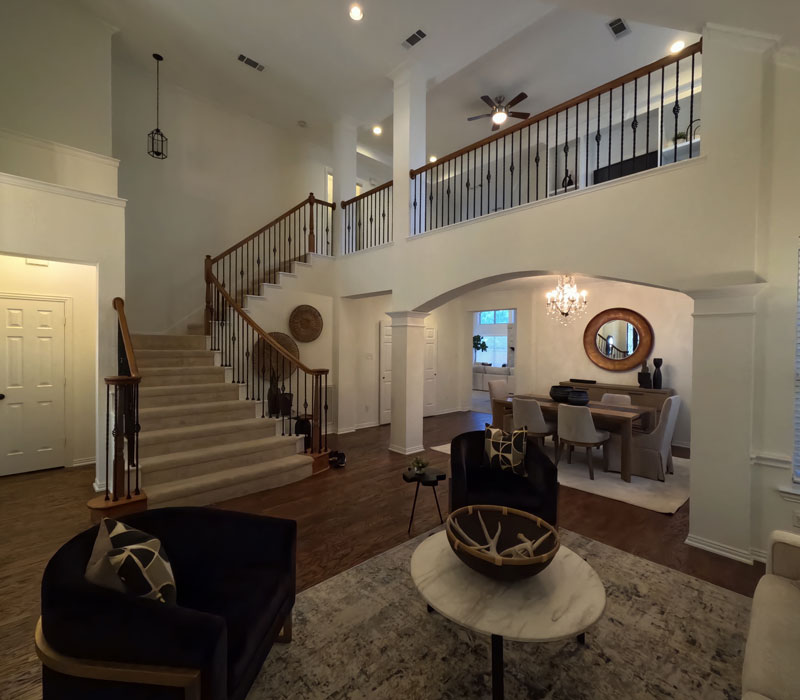
Consistent sheen across the full wall surface. Clean cuts at the ceiling, trim, and corners without tape lines or bleeding. No roller marks or stipple texture on walls that should read smooth. Trim that's sharp and even at every transition. These aren't details you notice consciously when they're right — but you notice them immediately when they're not. That level of finish is what we hold our work to on every project, regardless of size.
House Painting FAQs
How long does it take to paint a house interior?
A typical single-family home interior takes three to five days depending on square footage, number of rooms, ceiling height, and how much prep work the surfaces require. Homes that need significant repair work, color changes that require extra coats, or detailed trim work take longer. We'll give you a specific project window in your estimate and we build in realistic timelines that account for dry time between coats.
Do I need to move furniture before the painters arrive?
We ask that you clear the center of each room and move smaller items out of the space before we arrive. Large furniture that can't be moved easily we'll shift to the center and cover. We protect flooring, fixtures, and surfaces that aren't being painted — but the more cleared the space is when we start, the more efficiently the project moves.
How do I choose the right paint finish for each room?
Finish selection depends on the room's function and how much wear the surfaces take. Flat and matte finishes work well for low-traffic areas like bedrooms and formal dining rooms. Eggshell and satin are more practical for living areas and hallways — they clean more easily and hold up better to regular contact. Semi-gloss is standard for trim, doors, and kitchens and bathrooms. We'll walk through this with you during the estimate so you're not making finish decisions without context.
Can you match paint colors to what's already on my walls?
In most cases, yes — but accuracy depends on how much the existing paint has faded and whether you have the original color information. Fresh paint matched to a faded wall often reads noticeably different once it's on. We'll assess the situation honestly and tell you whether a spot match is realistic or whether repainting the full wall or room will give you a better result.
Call PPP North Dallas for Your Home Painting Project
House painting is one of the highest-impact changes you can make to a home — and the difference between a result you're satisfied with and one you're not comes down almost entirely to the process behind it. If you're ready to move forward or just want to understand what your project involves, an estimate is the right place to start.