
Brick Painting & Staining
Brick surfaces are often selected for their durability, texture, and distinctive appearance, but there may come a time when a property owner wants to change or update how that masonry surface looks. Brick painting and brick staining are two finishing methods commonly used on brick walls, facades, fireplaces, columns, and other masonry features. While both involve changing the appearance of brick, they are different processes that interact with the surface in different ways.
Brick painting applies a coating over the surface of the masonry, while brick staining penetrates the brick itself and allows the natural texture to remain visible. Understanding the differences between these approaches, along with the preparation requirements involved, can help property owners make informed decisions about their projects. As part of broader exterior painting services, brick painting and staining require careful surface evaluation, preparation, and product selection to ensure compatibility with masonry materials.

What Brick Painting & Staining Includes
What Is Brick Painting & Staining?
Brick painting and brick staining are finishing methods used to alter the appearance of masonry surfaces. These services may be performed on existing brick that has been exposed to weather and wear over time, or on newer brick surfaces that require a different aesthetic appearance.
Applications can include residential and commercial properties with brick exterior walls, facades, fireplaces, entry features, columns, and other masonry elements. Although painting and staining are often discussed together, they are not interchangeable processes. Each interacts with the brick differently and requires different preparation and product considerations.
Brick Painting vs. Brick Staining
What Is Brick Painting?
Brick painting involves applying an opaque coating over the surface of the masonry. The paint forms a visible layer that covers the existing brick color and creates a more uniform appearance across the surface.
Because brick is porous, masonry-compatible coatings and appropriate preparation methods are important considerations during the painting process. Surface cleanliness, adhesion, and compatibility with the masonry substrate all influence how paint is applied and maintained over time.
What Is Brick Staining?
Brick staining uses products designed to penetrate the masonry rather than sit on top of it as a coating. Instead of covering the surface completely, the stain is absorbed into the brick and modifies or enhances its color while allowing the natural texture and variation of the masonry to remain visible.
The interaction between stain and brick differs from paint because the product becomes part of the surface rather than creating a separate film layer. This distinction influences preparation requirements, product selection, and appearance.
Key Differences Between Painting and Staining
The primary difference between painting and staining is how the product interacts with the masonry surface.
Paint creates an opaque coating that covers the original brick color and establishes a more uniform appearance. Stain penetrates the masonry and typically allows more of the brick's natural texture and variation to remain visible.
The two methods also differ in how products are applied, how they interact with surface porosity, and how existing conditions may influence project planning. Understanding these distinctions is an important part of evaluating which approach aligns with the goals of a particular project.

Common Brick Surfaces for Painting & Staining
Brick painting and staining may be performed on a variety of masonry features, including:
Each surface presents its own considerations regarding accessibility, condition, exposure, and preparation requirements. Existing coatings, weather exposure, and masonry condition can all influence how the project is approached.
What Makes Brick Different From Other Surfaces?
Brick behaves differently from materials such as drywall, wood, or metal. Masonry is naturally porous, which means it can absorb moisture and finishing products differently than non-porous surfaces.
Brick surfaces may also contain variations in texture, density, and absorption rates. Existing coatings, environmental exposure, and masonry age can further affect how paint or stain interacts with the surface.
Because of these characteristics, products and preparation methods that work well on other materials may not be appropriate for brick. Evaluating the condition of the masonry before application is an important step in determining the proper preparation and product selection process.
Preparing Brick for Painting or Staining
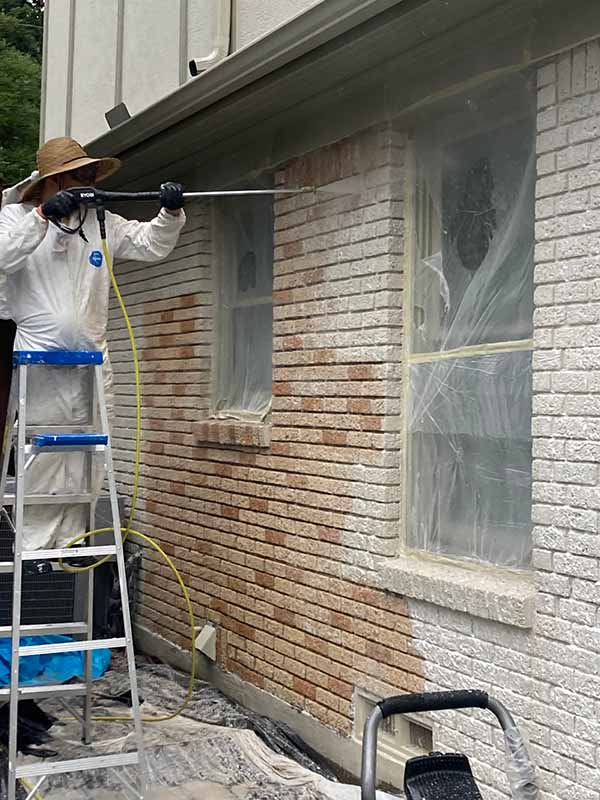
Preparation is one of the most important aspects of any brick painting or staining project. Before coatings or stains are applied, the masonry surface should be evaluated and prepared to address conditions that could affect application.
Cleaning the Brick Surface
Brick surfaces can accumulate dirt, dust, biological growth, airborne contaminants, and other debris over time. Cleaning removes these materials and creates a more suitable surface for paint or stain application.
The cleaning method may vary depending on the condition of the masonry and the type of contaminants present. Surface preparation helps ensure that coatings or stains interact with the brick rather than with accumulated surface debris.
Treating Efflorescence
Efflorescence is a white, powder-like residue that can appear on brick and masonry surfaces. It develops when moisture moves through the masonry and leaves mineral deposits behind as the water evaporates.
Before painting or staining, efflorescence should be identified and addressed because it may interfere with how products interact with the masonry surface. Evaluating the underlying moisture conditions can also be part of the preparation process.
Repairing Damaged Masonry
Cracks, deteriorated mortar joints, surface defects, and other masonry issues may affect the condition of the substrate. These conditions should be evaluated before paint or stain is applied.
Addressing masonry concerns before finishing helps create a more consistent surface and allows preparation efforts to focus on a stable substrate.
Masonry Primers and Surface Conditioning
Some brick painting projects require primers designed specifically for masonry surfaces. Primers may be used to improve compatibility between the substrate and the finish coat, help create a more uniform surface, or address specific project requirements.
The need for primer depends on factors such as existing coatings, substrate condition, product specifications, and overall project objectives. Surface conditioning requirements can vary based on the type of brick and the products being used.
Why Product Selection Matters on Brick Surfaces
Brick is a porous building material that absorbs moisture and finishing products differently than many other substrates. As a result, product selection plays an important role in the planning process.
Paints, stains, primers, and other materials intended for masonry applications are formulated differently from products designed for non-porous surfaces. Considerations such as absorption, moisture movement, compatibility, and substrate condition may all influence product selection.
Matching products to the characteristics of the masonry surface helps ensure that the selected materials are appropriate for the intended application.
Factors to Consider When Choosing Between Painting and Staining
Desired Appearance
Project goals often influence whether painting or staining is considered. Some property owners prefer a more uniform appearance and complete color change, while others want to maintain the natural texture and variation associated with brick surfaces.
Understanding the desired visual outcome is often one of the first considerations during project planning.
Existing Brick Condition
The condition of the masonry can influence which finishing options are appropriate for consideration. Existing coatings, prior repairs, surface deterioration, and brick composition may all affect how products interact with the substrate.
Evaluating the existing condition of the brick helps establish realistic expectations for preparation and application requirements.
Maintenance Considerations
Painting and staining involve different maintenance and recoating considerations. Surface accessibility, future project planning, and long-term maintenance objectives may all factor into the decision-making process.
Because each project is different, maintenance considerations should be evaluated alongside appearance goals and substrate conditions.
How a Brick Painting & Staining Project Works
Initial Assessment
The process typically begins with an evaluation of the brick surface. Existing coatings, masonry condition, visible defects, moisture-related concerns, and overall substrate condition are reviewed before preparation begins.
Surface Preparation
Preparation may include cleaning, efflorescence treatment, masonry repairs, surface conditioning, and other steps needed to prepare the substrate for finishing.
Product Selection
Products are selected based on the condition of the masonry, the intended application, and project-specific requirements. Product compatibility is an important consideration because masonry surfaces vary significantly in composition and condition.
Application
Once preparation is complete, the paint or stain is applied according to the requirements of the selected system. Application methods may vary depending on the product, surface characteristics, and project scope.
Final Review
After the application is complete, the finished surface is reviewed to verify that the project has been completed according to the planned scope and preparation procedures.
What to Know Before Hiring Someone for Brick Painting or Staining
Brick painting and staining involve more than simply applying a coating to the surface. Masonry behaves differently than drywall, wood, and other common building materials, which means preparation and product selection require specialized consideration.
Property owners should understand how brick absorbs moisture, how existing coatings may affect future applications, and why conditions such as efflorescence and masonry deterioration are evaluated before work begins. These factors can influence preparation requirements and determine which products are compatible with the surface.
Application consistency is also important because masonry surfaces often contain variations in texture, density, and absorption. Understanding how preparation, product selection, and application work together can help property owners evaluate the overall scope of a brick painting or staining project.
Brick Painting & Staining FAQs
What is the difference between brick painting and brick staining?
Brick painting applies an opaque coating over the masonry surface, while brick staining penetrates the brick itself. Painting covers the original color, whereas staining typically allows more of the natural texture and variation of the brick to remain visible.
Can brick be painted or stained after it has already been coated?
Previously coated brick may require additional evaluation before a new finish is applied. Existing paint, stain, or other coatings can influence preparation requirements and product compatibility.
Why does brick require special preparation before painting or staining?
Brick is a porous masonry material that can absorb moisture, contaminants, and finishing products differently than other surfaces. Proper preparation helps address conditions that may affect the application.
What is efflorescence on brick?
Efflorescence is a white mineral residue that appears on masonry surfaces when moisture moves through the brick and leaves mineral deposits behind. It is commonly evaluated during surface preparation.
Does brick staining preserve the texture of the brick?
Brick stain penetrates the masonry rather than creating an opaque surface coating. Because of this, the natural texture and character of the brick generally remain visible.
Do masonry surfaces require a primer before painting?
Some painting projects may require a masonry primer depending on substrate condition, existing coatings, and product specifications. Primer requirements vary based on the application.
What types of brick surfaces can be painted or stained?
Brick painting and staining may be performed on exterior walls, facades, fireplaces, columns, entry features, accent masonry, and commercial brick surfaces, depending on project conditions.
How do I choose between brick painting and brick staining?
Factors such as desired appearance, existing brick condition, maintenance considerations, and project goals can all influence the decision. Evaluating the condition of the masonry is often an important part of determining which approach is appropriate.
Request a Free Estimate
The consultation process provides an opportunity to evaluate the condition of the brick surface, discuss project goals, and determine whether painting or staining is appropriate for the application. A project assessment can help identify preparation requirements, product considerations, and surface-specific factors before work begins.