
Door Refinishing
A wood door is exposed to daily use, sunlight, moisture, and changing environmental conditions that can gradually affect the appearance and condition of its finish. Over time, stains may fade, clear coatings may wear down, and the surface may develop visible signs of weathering or use. Door refinishing is a process used to remove existing finishes, prepare the wood surface, and apply new stain and protective coatings.
Unlike painting, which covers the underlying material with an opaque coating, refinishing focuses on the wood itself. The process typically involves removing existing finishes, sanding to bare wood, addressing minor surface imperfections, applying stain when appropriate, and installing a protective finish designed for the door's environment and use.
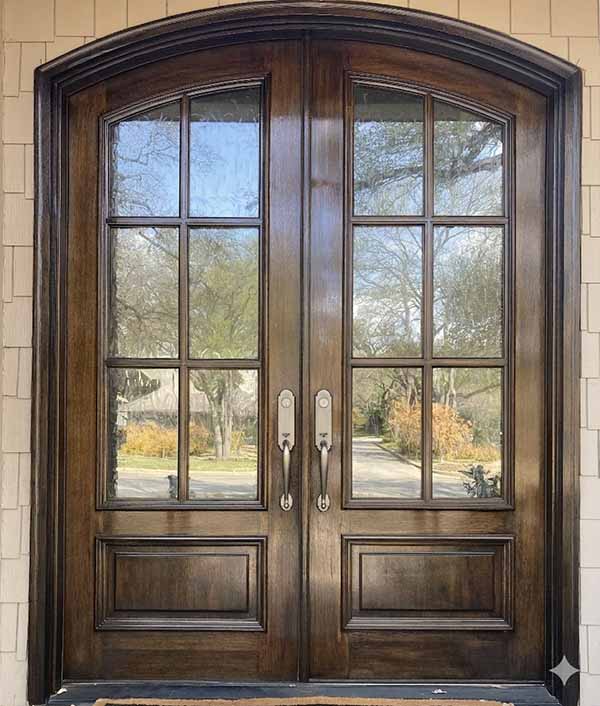
What Door Refinishing Includes
Door Refinishing Process
Existing Finish Removal
The first step in door refinishing is removing the existing finish from the wood surface. Depending on the condition and type of coating currently present, this may involve sanding, chemical stripping, or a combination of methods.
Existing varnish, polyurethane, stain, and other clear finishes may need to be removed to expose the underlying wood. The approach used depends on the thickness, condition, and composition of the existing finish.
Surface Preparation and Sanding
Once the previous finish has been removed, the wood surface is sanded to create a uniform substrate for stain and protective coatings.
Sanding helps remove residual finish materials, smooth surface irregularities, and prepare the wood for the next stages of the refinishing process. Multiple sanding stages may be used depending on the condition of the door and the requirements of the selected finish system.
Wood Repair and Surface Correction
Minor surface defects may be addressed before stain or protective coatings are applied.
This can include correcting small dents, light scratches, minor imperfections, or areas affected by normal wear. The extent of repair work depends on the condition of the door and the characteristics of the wood itself.
Stain Application
When a project involves refreshing or changing the appearance of the wood, stain may be applied after surface preparation is complete.
Unlike paint, stain allows the natural grain pattern of the wood to remain visible. Different stain colors and opacity levels may be selected depending on the desired appearance and the species of wood being refinished.
Protective Finish Application
After staining, a protective finish is applied to the wood surface.
Depending on the application, this may include clear coat systems, varnish, polyurethane, or other protective coatings designed for interior or exterior use. These finishes help protect the wood from normal wear, moisture exposure, and environmental conditions.
Exterior wood doors typically require protective coatings designed to withstand weather exposure, while interior doors may use products intended for indoor environments.
Final Inspection
After the refinishing process is complete, the door is inspected to verify finish consistency, coating coverage, and overall completion of the project.
This final review helps identify any areas that may require additional attention before the project is considered complete.
What to Know Before Hiring Someone to Refinish Your Doors
Refinishing and Painting Are Different Processes
Although both services involve improving the appearance of a door, refinishing and painting are fundamentally different processes.
Painting applies an opaque coating over the existing surface. The wood grain is concealed beneath primer and paint layers, creating a uniform painted finish.
Refinishing removes the existing finish and exposes the wood itself before stain and protective coatings are applied. Because the wood remains visible, surface preparation and finish application focus on preserving and enhancing the natural characteristics of the material rather than covering it.
The choice between painting and refinishing often depends on the type of door, its existing condition, and whether preserving the exposed wood appearance is a project goal.
When Refinishing May Be the Appropriate Choice
Whether a door is refinished or repainted often depends on the existing condition of the surface and the desired appearance of the finished door.
Refinishing is commonly considered when a wood door already has a stained or clear-coated finish, and the natural wood grain remains an important part of the door's appearance. In these situations, the existing finish may be removed so the wood can be sanded, repaired where appropriate, and prepared for new stain and protective coatings.
Refinishing may also be performed when an existing stain color is no longer desired, when clear finishes have deteriorated due to age or environmental exposure, or when surface wear has affected the appearance of exposed wood. Because the wood remains visible after refinishing, preparation focuses on the condition of the wood itself rather than covering it with an opaque coating.
Repainting follows a different approach. Rather than exposing and preserving the wood surface, paint creates a solid-color finish that conceals the underlying material. Some doors may be suitable candidates for either process, while others may be better suited to one approach depending on their condition, construction, and previous finish history.
Evaluating the existing finish, the condition of the wood, and the intended appearance of the door can help determine whether refinishing or repainting is the more appropriate process for a particular project.
Not Every Wood Door Is a Candidate for Refinishing
The suitability of a door for refinishing depends on several factors.
Doors with extensive paint buildup, significant structural damage, deteriorated veneers, or previous repairs may present challenges that affect the refinishing process. Some surfaces may require additional preparation or may not be suitable candidates for complete refinishing.
Evaluating the existing condition of the door helps determine what level of refinishing is possible and what preparation work may be required.
Exterior Wood Doors Face Different Conditions Than Interior Doors
Exterior wood doors are exposed to environmental conditions that interior doors typically do not encounter.
Direct sunlight, rain, humidity fluctuations, temperature changes, and seasonal weather patterns can all affect the performance and longevity of exterior finishes. Entry doors that receive significant sun exposure may experience different wear patterns than doors located beneath covered porches or protected entryways.
Interior wood doors are generally exposed to more stable conditions, although traffic levels and daily use still influence surface wear over time.
Interior and Exterior Wood Doors Require Different Refinishing Considerations
Although the refinishing process follows many of the same general principles, interior and exterior wood doors are exposed to different conditions and may require different approaches when selecting stains and protective finishes.
Interior wood doors are typically located in climate-controlled environments where they experience relatively stable temperatures and lower moisture exposure. Wear on interior doors is often related to daily use, contact points around handles and edges, and normal household activity. Because they are generally protected from direct sunlight and weather, interior doors may experience different finish wear patterns than exterior doors.
Exterior wood doors face a broader range of environmental conditions. Sun exposure, rain, humidity fluctuations, temperature changes, and seasonal weather can all affect the condition of the finish over time. Entry doors that receive direct sunlight for extended periods may experience different rates of fading or finish deterioration than doors located beneath covered porches or protected entryways.
These differences influence the type of preparation, stain selection, and protective coatings used during the refinishing process. Evaluating where the door is located, and the conditions it regularly faces, helps determine which finishing systems may be appropriate for the project.
Longevity Depends on Exposure and Maintenance
The lifespan of a refinished door is influenced by several factors.
Environmental exposure, door orientation, weather conditions, traffic levels, maintenance practices, and the type of finish system used all play a role in how long the finish continues to perform as intended.
Exterior doors exposed to direct sunlight and weather conditions may require more frequent maintenance than protected exterior doors or interior wood doors. Regular inspection and maintenance can help identify signs of wear before more extensive refinishing work becomes necessary.
Door Refinishing FAQs
Can every wooden door be refinished?
Not necessarily. The suitability of a door for refinishing depends on factors such as the existing finish, overall condition of the wood, previous repairs, veneer construction, and the presence of extensive damage. An evaluation of the door's condition helps determine whether refinishing is appropriate.
What's the difference between refinishing and repainting a door?
Repainting covers the surface with primer and paint, creating an opaque finish. Refinishing removes the existing finish, exposes the wood, and applies stain and protective coatings while allowing the natural wood grain to remain visible.
Do you refinish both interior and exterior wood doors?
Door refinishing may be performed on both interior and exterior wood doors. The preparation methods and protective coatings used can vary depending on where the door is installed and the conditions it faces.
How often does a wood door need refinishing?
There is no single refinishing schedule that applies to every door. Factors such as sun exposure, weather conditions, maintenance practices, traffic levels, and the type of finish system used all influence when refinishing may become necessary.
What affects how long a refinished wood door lasts?
The longevity of a refinished wood door depends on several factors, including sun exposure, weather conditions, moisture levels, door orientation, traffic levels, maintenance practices, and the type of protective finish used. Exterior wood doors exposed to direct sunlight and changing weather conditions may experience different wear patterns than protected exterior doors or interior wood doors. Regular inspection and maintenance can help identify signs of finish wear over time.
Can you change the stain color during door refinishing?
In many cases, stain color can be changed as part of the refinishing process. Because refinishing typically involves removing the existing finish and preparing the wood surface, a new stain may be applied before protective coatings are installed. The extent to which the color can be changed depends on factors such as the wood species, the condition of the surface, and the characteristics of the existing finish. Different wood types absorb stain differently, which can influence the final appearance of the refinished door.