
Interior Masonry Paint Removal
PPP North Dallas provides interior masonry paint removal services for residential and commercial properties. Our trained restoration specialists safely remove paint from brick, stone, and fireplace surfaces using controlled chemical and mechanical methods designed to protect the integrity of the underlying masonry. Each interior masonry paint removal project is performed with structured surface evaluation, staged removal techniques, and careful neutralization to ensure the original material is preserved as much as possible. Proper masonry paint removal restores natural texture, improves architectural character, and prevents long-term damage caused by improper coating removal or DIY methods.
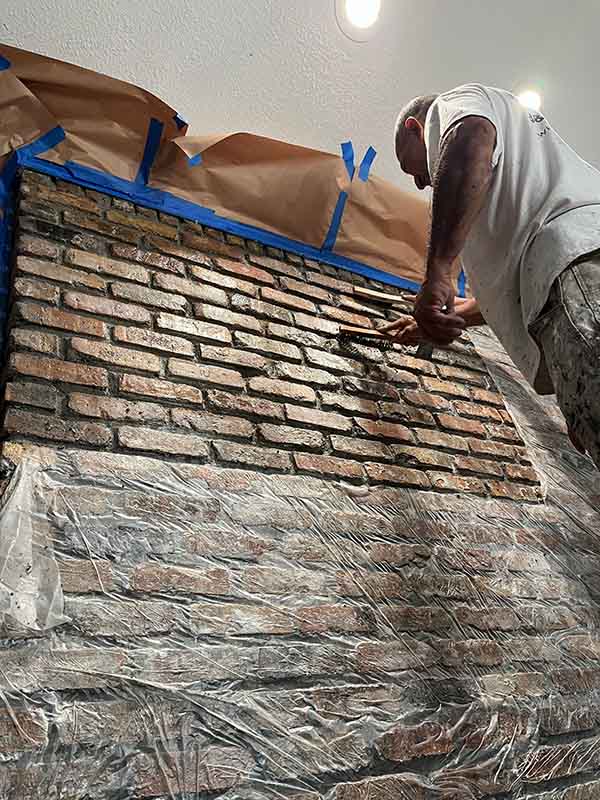
What Interior Masonry Paint Removal Includes
Interior Masonry Paint Removal Process
Surface Evaluation and Material Assessment
Every project begins with a detailed evaluation of the masonry surface. Brick and stone behave differently depending on age, porosity, and previous coatings, so we identify what type of paint is present, how many layers exist, and how deeply it has bonded into the surface. This step determines whether full removal is possible or if a more conservative restoration approach is required.
Protecting the Interior Environment
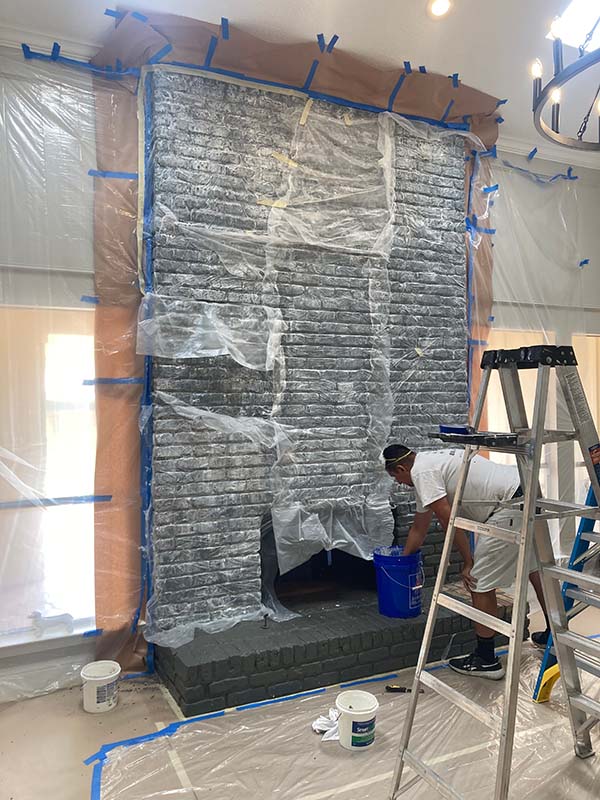
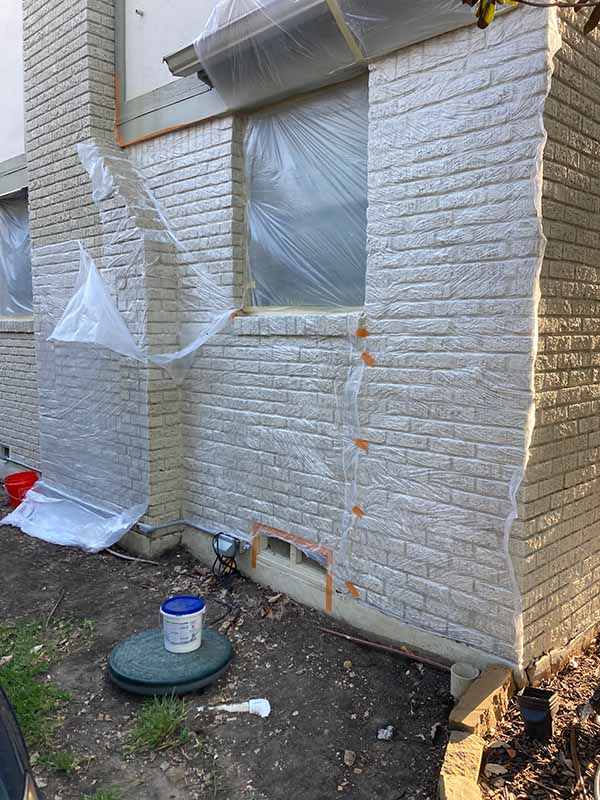
Before any removal begins, surrounding surfaces are fully protected. Interior masonry paint removal creates residue and requires controlled containment to prevent contamination of flooring, trim, or adjacent walls. Proper preparation ensures the process stays localized and does not impact the rest of the space.
Controlled Paint Removal
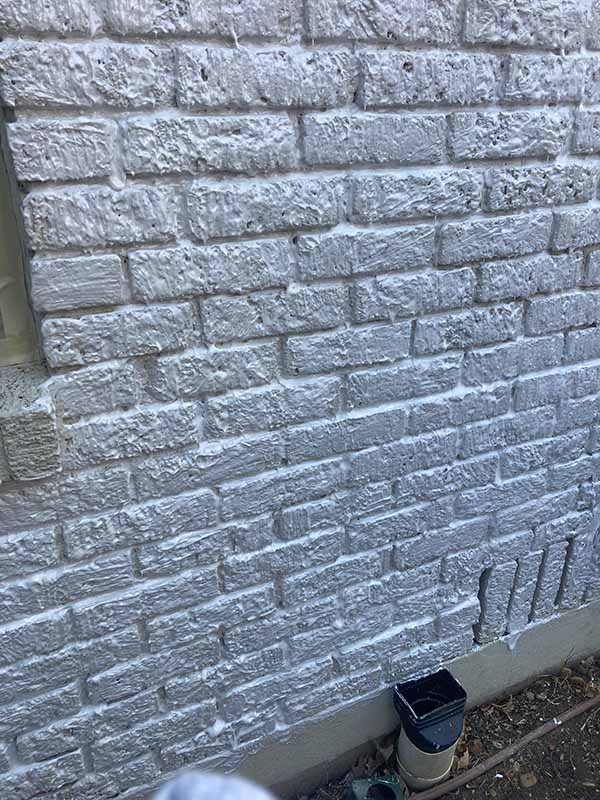
We remove paint in stages rather than attempting full extraction in a single pass. Masonry does not respond well to aggressive stripping, so we use controlled methods that gradually lift coatings while minimizing surface disruption. This approach helps preserve brick face texture and prevents mortar damage or surface pitting.
Residue Neutralization and Cleaning
After paint removal, the surface is carefully neutralized and cleaned. This step ensures that no chemical residue or loosened material remains embedded in the masonry pores. Proper neutralization is critical to stabilizing the surface and preventing future discoloration or degradation.
Final Inspection and Surface Restoration Check
Once the surface is fully cleaned, we conduct a detailed inspection to confirm consistency, texture preservation, and structural integrity. The goal is to restore the masonry as close to its natural condition as possible without creating artificial uniformity or over-processing the surface.
What to Expect When Hiring a Masonry Paint Removal Professional
Masonry is not a standard paint surface
Unlike drywall or wood, brick and stone are porous materials that absorb coatings deeply. This means paint removal is not a surface-level task—it requires understanding how coatings interact with mineral-based materials. Improper removal can permanently alter texture or expose uneven coloration that cannot be corrected.
Removal is slower than repainting, but more controlled
Interior masonry paint removal is intentionally slow because the material must be treated carefully. Rushing the process often leads to surface erosion or patchy results. Proper removal prioritizes preservation over speed, ensuring the underlying masonry remains structurally intact.
Not all surfaces should be fully stripped
Some masonry surfaces may have been previously damaged, sealed, or chemically treated. In these cases, full paint removal may not be recommended. Instead, partial restoration or alternative surface treatment may be used to improve appearance while protecting structural integrity.
Fireplace surfaces require additional care
Painted brick fireplaces are one of the most common applications of this service. However, fireplace surfaces often contain multiple coating layers and have been exposed to heat cycles over time. Because of this, they require more conservative removal methods and careful evaluation before treatment begins.
Important: Fireplace restoration is handled as part of this service, but instructional or DIY fireplace paint removal guidance is not included in this scope. Educational content on fireplace paint removal is handled separately in informational resources and is intended only to help homeowners understand risks—not perform the work themselves.
Why Proper Masonry Paint Removal Matters
Incorrect paint removal can permanently damage masonry surfaces. Brick faces may become uneven, mortar joints may weaken, and chemical residue can remain trapped inside porous material. These issues often become visible only after the surface has dried or aged further.
Professional removal ensures that each layer is treated with controlled methods that respect the structural and visual properties of the material. The goal is not just to remove paint, but to preserve the architectural integrity of the surface beneath it.
A properly restored masonry surface should maintain natural variation, clean texture, and stable structure without signs of over-processing or surface damage.
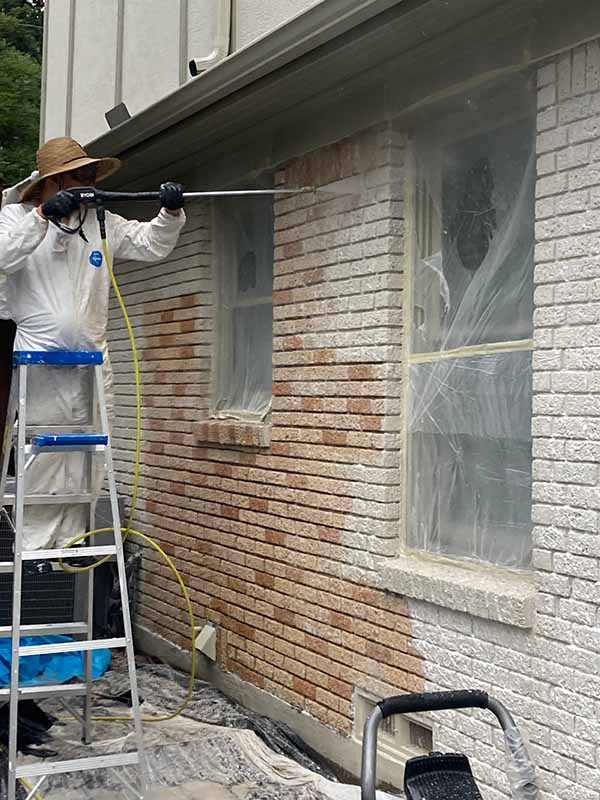
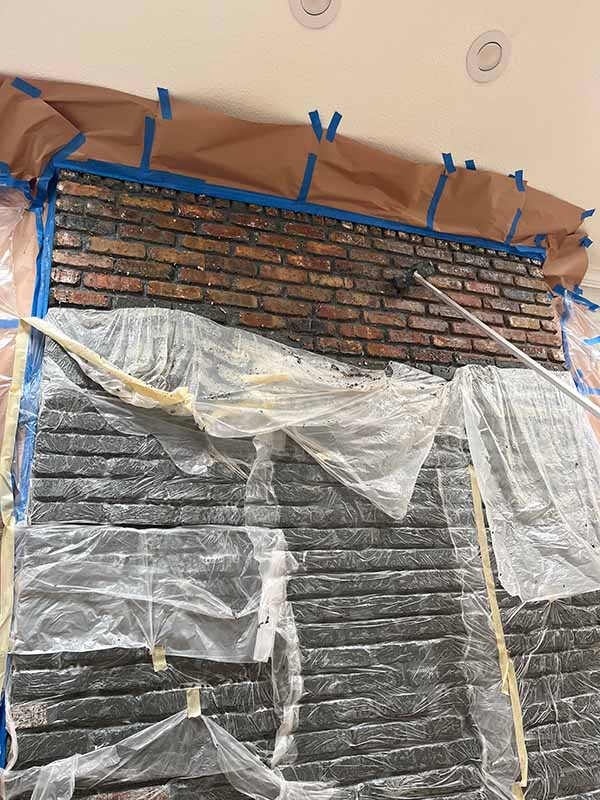
What a High-Quality Finish Looks Like
A properly restored masonry surface should not look artificially uniform. Instead, it should reflect natural variation in tone, texture, and depth.
A quality interior masonry paint removal project results in:
If a surface appears overly smooth, patchy, or chemically burned, it is usually a sign that the removal process was not properly controlled.
Interior Masonry Paint Removal FAQs
Can all paint be removed from brick or stone?
Most painted masonry surfaces can be significantly restored, but results depend on how many paint layers exist and how deeply the coating has penetrated the material.
Is interior masonry paint removal safe for older homes?
Yes, but older masonry requires more controlled methods due to increased fragility and potential prior exposure to sealants or coatings.
How long does the process take?
Timing depends on surface size, coating thickness, and material condition. Most projects are completed in staged phases to ensure safe and controlled removal.
Can painted fireplaces be restored through this service?
Yes. Painted brick fireplaces are one of the most common applications of interior masonry paint removal and are evaluated as part of the same service process.
Call PPP North Dallas for Your Interior Masonry Paint Removal Project
Painted brick, stone, and fireplace surfaces don’t improve with time—they gradually lose texture, depth, and character as coatings age and bond more deeply into the masonry. In many cases, the difference between a surface that can be safely restored and one that becomes permanently damaged depends on timing and the correct removal approach. If you’re considering paint removal for interior masonry, the first step is a professional evaluation to assess the surface condition, identify coating types, and determine the safest restoration method before any work begins.